
Renovate or Sell? Boost Your Home Equity
Homeownership, Equity Strategy
Renovate or Sell? How to Decide Which Move Builds More Equity
With mortgage rates hovering above 7% and home prices still historically high, many owners are asking a big question: is it smarter to renovate the home you have, or sell and move to something that already fits your needs? The right choice can significantly impact how quickly you grow your home equity over the next few years.
Step 1: Understand What Equity Really Is
Equity is the portion of your home you truly own. In simple terms: Home value − mortgage balance = your equity. According to the National Association of REALTORS® (NAR), the typical homeowner is projected to gain about $16,000 in equity in 2026 alone as prices edge higher nationally, even in a cooler market environment (nar.realtor).
In October 2026, existing-home prices are still near record levels, with a median around $417,500 and year-over-year gains of about 1–2% in many areas, even as sales volumes remain subdued and price cuts become more common. That means your equity can grow from two directions:
Market appreciation – your home’s value rising over time.
Forced equity – value you create through smart renovations or paying down your mortgage.
The renovate-or-sell decision is really about which path will grow both types of equity faster, given today’s high rates and shifting home prices.
Step 2: Factor In Today’s Market and Mortgage Rates
As of October 2026, the average 30‑year mortgage rate sits around 7.28%, the highest in years. That has cooled buyer demand, pushed more sellers to cut prices, and increased inventory closer to pre‑pandemic levels. Yet forecasts for 2026 still point to modest price growth nationally—roughly 0.5% to 2.5%, depending on the source (Realtor.com, Zillow, Pulsenomics).
For you as a homeowner, that creates a tension:
If you already have a low-rate mortgage from the 3–4% era, selling and buying again could mean a much higher monthly payment for a similar-priced home, which slows your ability to pay down principal and build equity.
If you bought more recently at a higher rate, the payment jump may be smaller, but transaction costs and uncertain short-term price growth still matter.
💡 Equity Insight: In a high-rate, slow-growth market, keeping a low-rate mortgage and improving what you already own often beats trading up—unless your current home simply can’t meet your needs.
Step 3: Know Which Renovations Actually Build Equity
Not every project is an equity booster. The long-running Cost vs. Value reports consistently show that modest, practical upgrades tend to deliver the best return, especially when buyers are price-sensitive like they are today. Big, luxury overhauls often recoup far less of their cost at resale.
High-ROI projects (often 70%–100%+ of cost): garage door replacement, siding or entry door replacement, minor kitchen refreshes (new counters, hardware, paint), improved landscaping and curb appeal, basic bathroom updates, and energy-efficient windows or insulation.
Moderate ROI projects: adding a deck or patio, finishing a basement, midrange bathroom remodels, modest primary-suite improvements.
Lower ROI projects: over-the-top kitchen gut jobs, highly customized built‑ins, luxury pools, and highly personal design choices that may not appeal to most buyers.
With home price growth expected to be modest in 2026, you can’t count on a hot market to bail out an over-improvement. Focus on renovations that solve real functional problems and align with what buyers in your area actually want, rather than chasing trends that may fade quickly.
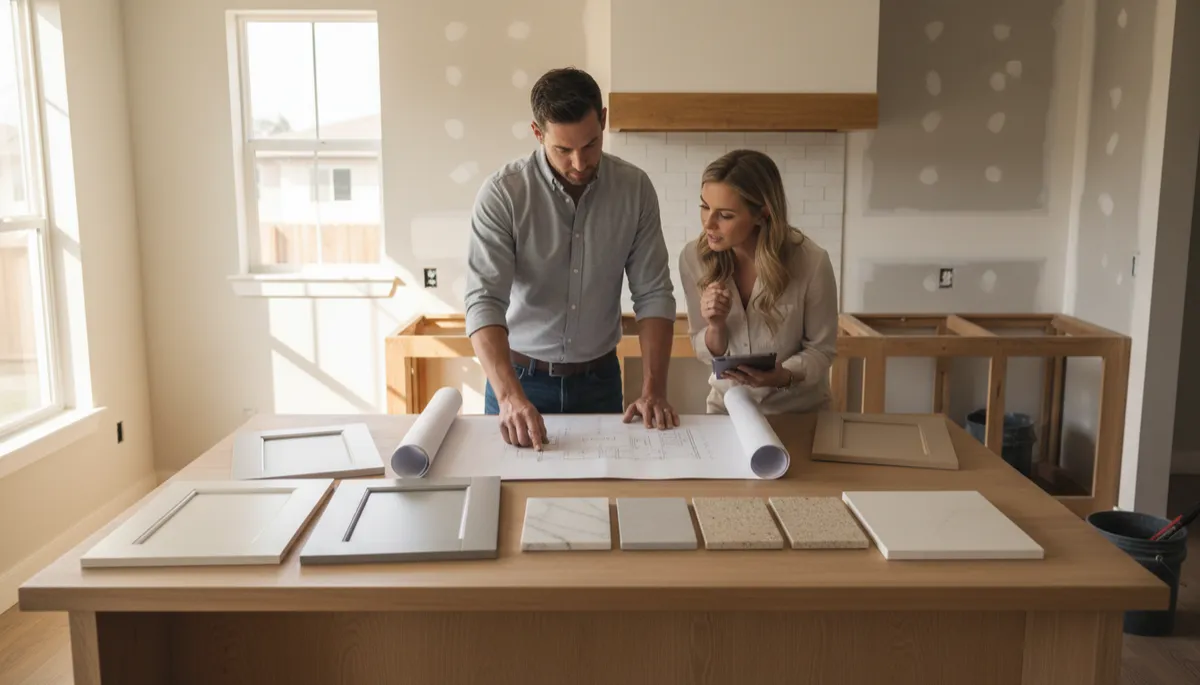
Modest, well-planned kitchen updates often recoup more value than full gut remodels.
Step 4: Run the Numbers for Renovating vs. Selling
Scenario A: Renovating to Build Equity
Start with a clear, written estimate for your project. Then ask two questions:
How much will this realistically increase my home’s value? A local agent can provide a “before and after” price opinion based on comparable homes. If a $40,000 project is likely to add $30,000 in value, you’ve effectively bought $30,000 in new equity for $40,000—plus whatever enjoyment you get from the upgrade.
How am I paying for it? Using savings preserves equity. Financing via a home equity line of credit (HELOC) or cash‑out refi adds debt and interest costs. With rates still elevated, borrowing to renovate must be weighed carefully against potential equity gains.
📌 Key Takeaway: A renovation doesn’t have to “pay for itself” dollar-for-dollar to be worthwhile—but if you plan to move within 3–5 years, focus on projects with strong resale appeal and solid cost recovery.
Scenario B: Selling and Buying a New Home
Selling can unlock a large chunk of equity at once—but it also comes with transaction costs (agent commissions, closing fees, potential repairs or concessions) that often total 7–10% of the sale price. Then you face a new mortgage at today’s rates, higher property taxes in many areas, and moving expenses.
Estimate your net proceeds: sale price minus mortgage payoff, minus selling costs. That’s the equity you’ll carry into your next home as a down payment.
Compare your current monthly payment (principal, interest, taxes, insurance) with what your payment would be on a new home at today’s interest rates and prices in your target area.
In a market where prices are growing slowly and borrowing costs are high, it may take years for a move‑up purchase to meaningfully outpace the equity you could have built by staying put and renovating wisely.
Step 5: Weigh Lifestyle Needs Against Pure Equity Math
Equity isn’t the only factor. Your home has to work for your life. Some situations lean strongly toward one choice or the other:
When Renovating Often Wins
You love your neighborhood, schools, and commute, but the home feels dated or cramped. Finishing a basement, opening a wall, or adding a bath may be cheaper than moving, and can add solid resale value.
You’re locked into a significantly lower mortgage rate than the current 7%+ environment. Preserving that rate while improving the property can turbocharge long-term equity growth.
Your local market is still appreciating steadily (many Midwest and Northeast metros are seeing stronger gains) and there’s buyer demand for updated homes. Strategic upgrades can position you for a higher sale later.
When Selling May Be the Better Equity Play
Your home has fundamental limitations that are expensive or impossible to fix—like being on a busy road, in a flood zone, or lacking the bedroom or lot size you truly need.
You’re in a market showing price softness or declines (some Sunbelt and West Coast areas fall into this category), and you’re worried about values slipping further. Locking in today’s equity and buying in a more stable or affordable area could protect long-term wealth.
You’re significantly over‑housed—too much space, maintenance, and property tax for your current stage of life. Downsizing can free up equity and reduce monthly costs, letting you invest the difference elsewhere.
Step 6: A Simple Framework to Make Your Decision
To compare renovating versus selling in a clear, practical way, walk through this four-part framework:
Time horizon: How long do you realistically plan to stay? If it’s less than 3–5 years, favor lower-cost, high-impact updates over major structural changes. If it’s 7–10+ years, comfort and lifestyle can weigh more heavily than immediate resale ROI.
Financial picture: Consider your current rate, monthly payment, savings, and debt. Get quotes for renovation financing and a realistic preapproval for a new purchase. Seeing side-by-side monthly payments and cash required can be eye-opening.
Local market data: Ask a trusted local agent for recent comparable sales and a price opinion with and without renovations. Look at how long homes like yours are staying on the market and how often sellers are cutting prices. In some metros, updated homes are still commanding strong premiums; in others, buyers are more price-sensitive.
Quality of life: List what’s not working—number of bedrooms, layout, accessibility, yard, commute, noise, schools. Note which issues a renovation can truly fix, and which would require a move no matter how much you spend.
Step 7: Putting It All Together
There’s no one-size-fits-all answer to “renovate or sell?”—especially in a 2026 market marked by high rates, uneven price growth, and big regional differences. But you can make a confident, equity-smart decision by grounding your choice in numbers and lifestyle realities:
If you have a low mortgage rate, like your location, and your home’s flaws are fixable with targeted, high-ROI projects, renovating is often the clearer path to building equity over the next several years.
If your home fundamentally can’t meet your needs or your local market looks vulnerable, selling strategically and reallocating your equity—perhaps to a more affordable region or a smaller, easier-to-maintain property—may be the smarter long-term move.
💡 Final Thought: Before you swing a hammer or stick a “For Sale” sign in the yard, talk with both a local real estate professional and a reputable contractor. Ask each one the same question: “Which option do you genuinely believe will grow my equity more over the next 5–10 years?” Their grounded, local insight—paired with your own priorities—will point you toward the move that builds not just more equity, but a life that fits.
Still have questions? Let's schedule a quick 15 minute call to discuss your needs https://calendly.com/bnhre/new-meeting.
Get your COMPLIMENTARY Home Valuation and Home Selling Guide at timbeary.realtor